소멸의 시학: 삭는 미술에 대하여
Sak-da: The Poetics of Decomposition
1.30 - 5.3
국립현대미술관 서울
MMCA Seoul
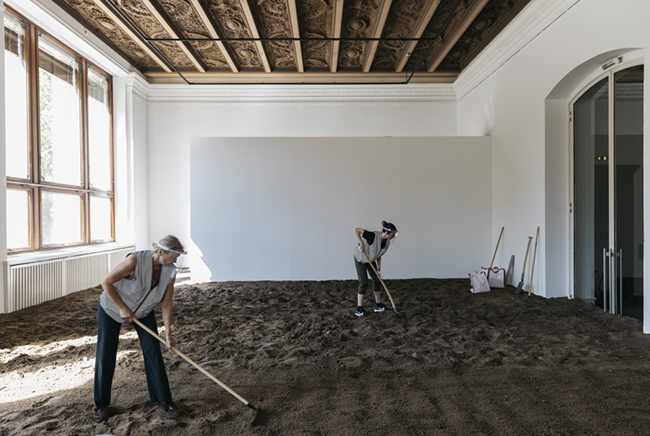
아사드 라자, 〈흡수〉, 2020. 《지구로 내려오기: 기후 예술 담론 언플러그드》 (그로피우스 바우, 베를린, 2020) 전시 전경. 작가 및 베를리너 페스트슈필레/이머전 제공. 사진: 아이케 발켄호르스트.
Asad RAZA, <Absorption>, 2020. Installation view of 《Down to Earth. Climate Art Discourse unPlugged》 (Gropius Bau, Berlin, 2020). Courtesy of the artist and Berliner Festspiele/Immersion. Photo: Eike WALKENHORST.
《소멸의 시학: 삭는 미술에 대하여》는 자신의 분해를 공공연히 드러내는 작품을 ‘삭는 미술’이라는 이름으로 묶어 소개하는 전시이다. 인류 활동이 지구환경에 막대한 영향을 미치는 시대, 곧 ‘인류세’가 야기한 총체적 위기 앞에 작품이 어떻게 변화하고 있는지를 살피고, 그역사적·미학적·사회적 의미를 탐색해본다.
전시는 훌륭한 작품이란 곧 변하지 않을, 혹은 영원히 변해서는 안될 작품이라는 통념이 과연 동시대에도 유효한가를 묻는다. 그리고 인간을 넘어 다양한 존재와 더불어 살아가기 위해 자신을 삭히기로 마음먹은 작품들을 보여준다. ‘삭다’라는 우리말에 ‘썩은 것처럼 되다’와 ‘발효되어 맛이 들다’라는 의미가 동시에 담겨 있듯, 이 작품들은 분해됨으로써 비인간 존재와 공존하고 자연의 순환에 참여하고자 한다.
전시는 ‘서막’과 1막 ‘되어가는 시간’, ‘막간’, 그리고 2막 ‘함께 만드는 풍경’이라는 네 부분으로 구성되어, 국내외 작가 15인(팀)의 회화, 조각, 설치 등 50여 점 작품을 선보인다.
《Sak-da: The Poetics of Decomposition》 introduces works that openly reveal their own process of decay, brought together under the practice of “sak-da,” or decomposing art. In the era of the Anthropocene—in which human activity exerts a profound impact on the Earth’s environment—the exhibition examines the ways in which artworks are changing in the face of a comprehensive global crisis and explores the historical, aesthetic, and social meanings of these transformations.
This exhibition questions whether the long-held belief that a great work of art is something that does not change, or must not change, remains valid in the contemporary era. It presents works that choose to decay in order to co-live with diverse beings beyond the human. Just as the native Korean verb sak-da simultaneously conveys the meanings of “to become rotten” and “to ferment and develop flavor,” these works seek coexistence with nonhuman beings through decomposition and participation in the cycles of nature.