오월 : 1980년대 광주민중미술
May : Gwangju Minjoong Art in the 1980s
5.1 - 7.21
Gwangju Museum of Art (Q-47)
T.82-62-613-7100
광주시립미술관
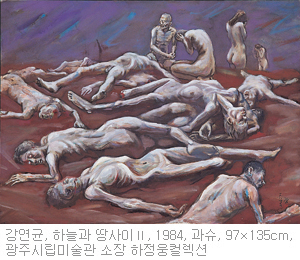
한국 민중미술운동을 촉발시켰던 1980년 5·18민주화운동 이후 10년간의 광주전남지역 민중미술을 볼 수 있는 전시회이다. 광주전남 작가들은 5·18민주화운동 관련 사건을 사실적 또는 은유적 방법으로 작품에 담았으며, 왜곡된 역사적 사실을 바로 알리기 위해 작품을 통해 한국 사회의 현실 문제를 비판적 시각으로 표현했다. 또한, 미술가들은 현실의 부조리함과 비판을 담은 실천적 현장미술에 특히 적극적이었다.
이번 전시에 1980년대의 시대적 분위기 속에 제작된 미술작품과 사료들을 한 장소에 모았으며 강연균, 신경호, 홍성담, 홍순모 등의 1980년대 초반 작품과 홍성담, 조진호, 김경주, 전정호, 이상호 등의 판화작품, 미술단체인 미술패 토말, 광주시각매체연구소, 광주전남미술인공동체 등이 제작한 걸개그림, 1987년 이후의 박석규, 이사범, 한희원, 송필용, 박문종 등의 작품 등을 볼 수 있다. 이들 작품을 통해 참혹했던 당시의 상황을 예술을 통해 극복해나간 1980년대 광주미술의 현장을 살펴보고 5·18민주화운동의 정신과 민주, 인권, 평화의 의미를 되새겨 보고자 한다.
The exhibition is an opportunity to view the Minjoong art of the Gwangju-Jeonnam region of the decade since the May 18th democratization movements, which inspired the Korean Minjoong art movement. Artists of the Gwangju-Jeonnam region represented events related to the May 18th democratization movement in their works through realistic or metaphorical methods, and represented issues of reality in Korean society through critical perspectives in their works in order to correct misrepresentations of historic facts. Additionally, the artists were especially aggressive in practical, socially involved works of art imbued with criticism and unreasonable aspects of reality.
We have brought together in one setting artworks and historic records which have been created in the temporal atmosphere of the 1980s, and among them are available for viewing works from the early 1980s by Kang Yeon-Gyun, Shin Kyung-ho, Hong Sung-dam and Hong Soon-mo, et al and prints by Hong Sung-dam, Cho Jin-ho, Kim Kyung-joo, Jeon Jeong-ho and Lee Sang-ho, et al, outdoor paintings by the art organizations of Misulpae Tomal, the Gwangju Visual Media Research Laboratory and the Gwangju-Jeonnam Art Professionals Community, etc., and works by Park Seok-kyu, Rhee Sa-beum, Han Hee-won, Song Phil-yong and Park Moon-jong, et al since 1987. We intend to inspect the art scene of Gwangju in the 1980s, which had overcome the devastating situation of the time through art, and to ruminate over the spirit of the May 18th democratization movement and the significance of democracy, human rights and peace.